Basement Flooding Cleanup in Auburn, WA
Daylight basements on West Hill and Lea Hill take water from the uphill side first. The extraction crew clears the floor and the drying team dries the finished walls behind the paneling.
(888) 509-1696Get the Auburn basement drying started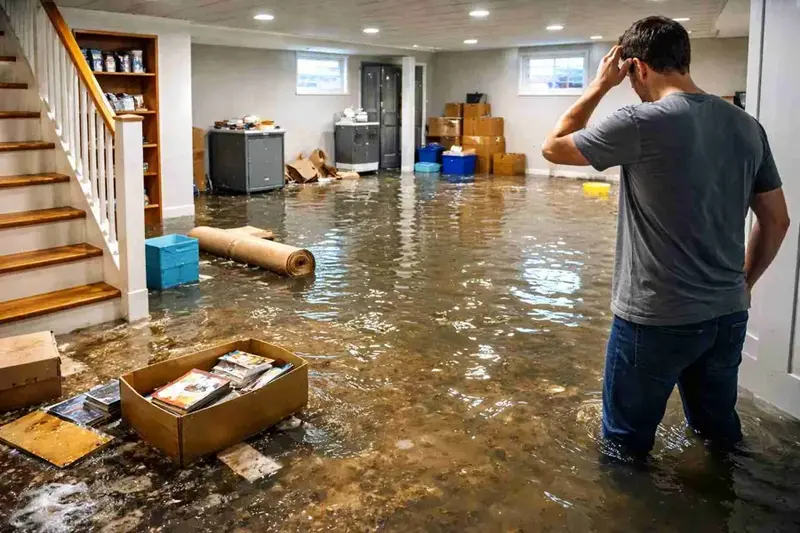
First steps for basement flooding cleanup in Auburn
- 1
Power off if safe
Switch off lower-level circuits only from a dry panel.
- 2
Stop inside sources
Close the water heater and laundry valves if they are involved.
- 3
Get belongings up
Move boxes, electronics and furniture off the wet floor.
- 4
Document and call
Photograph the water level and every wet room.
When you call, have this ready
- Which rooms and which level of the house are wet
- Whether the water is clean, gray or sewage
- When it started and whether the source is stopped
The standard behind basement flooding cleanup in Auburn
Rapid local response
Auburn water damage restoration experts work around the clock, and the response team rolls with truck-mounted extraction, air movers and moisture meters already on board.
IICRC S500 drying standard
IICRC S500 is the industry drying standard. The drying team runs structural drying, not just surface drying, and the equipment stays until the readings say dry.
Claim-ready documentation
A moisture map from the first walkthrough, daily psychrometric logs and timestamped photos taken before any demolition: the file an adjuster works from.
Green River valley water experts
Crawl spaces on the valley floor, daylight basements on West Hill and Lea Hill, and long wet-season rains: the Auburn restoration crew knows where water settles in a Puget Sound house.
What does basement flooding cleanup cost in Auburn, WA?
In Auburn, WA, basement flooding cleanup typically runs $2,000 to $12,000 or more. The drivers are the water category, the square footage of the basement, how much of it is finished (carpet, paneling, drywall) and how fast drying started.
Unfinished or small area
- Pump-out and extraction
- Slab and wall drying
- Daily readings
Finished basement, clean water
- Pad removal, carpet saved where possible
- Wall cavity drying
- Dehumidification
Outside water, finished space
- Flood cuts and removal
- Antimicrobial treatment
- Extended drying
These are typical ranges, not a quote. For a closer planning number try the water damage cost calculator.
How basement flooding cleanup moves from call to dry
Walkthrough and moisture map
The tech who does the walkthrough finds the source and maps every wet wall, floor and cavity before any equipment goes down.
Extraction
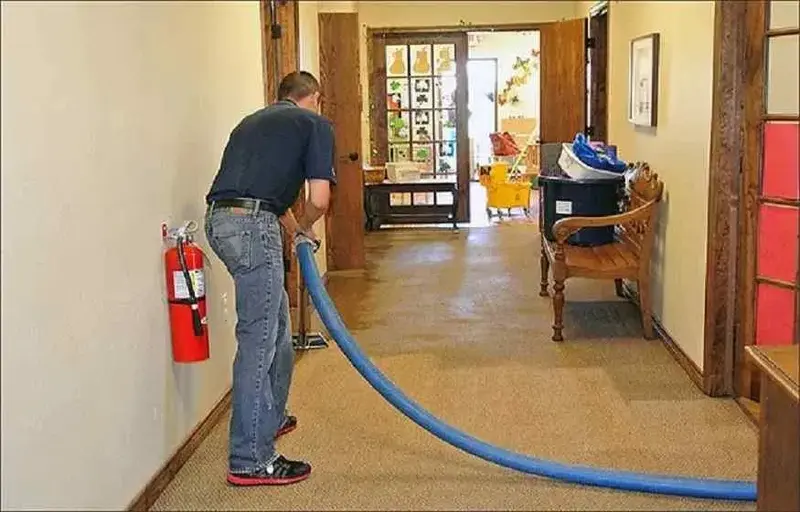
The extraction crew pulls standing water so it leaves the building instead of moving to the next room.
Drying setup
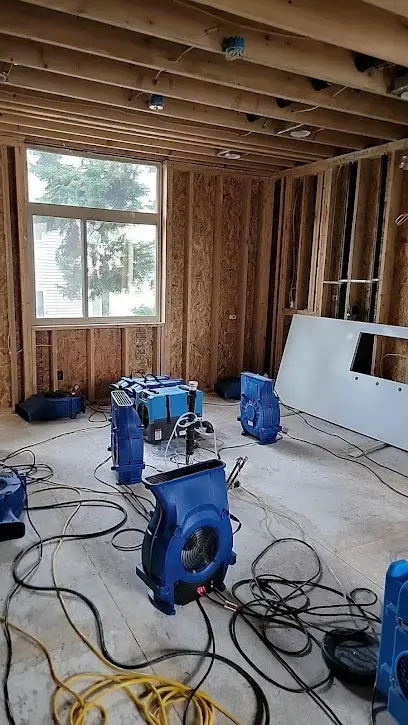
Air movers go in at the evaporation load of each room, with dehumidifiers pulling that moisture back out of the air.
Daily readings
The drying team logs temperature, humidity and material readings daily and moves equipment to where the water still is.
Dry verification
Equipment comes out when wet materials read within 2 to 4 points of a dry reference, and the logs go into the claim file.
Auburn has fewer full basements than the Midwest, but the hillside neighborhoods are full of daylight basements: one wall buried in the slope, the other opening onto the yard. When the ground saturates in a long rain, water pushes through the buried wall, comes up through the slab joint or runs in under a door. Finished basements make it worse, because carpet, paneling and drywall hide how far the water went.
Why Auburn basements take water
- Saturated hillside soil on West Hill and Lea Hill pressing on the uphill wall.
- Clogged or disconnected footing drains around 1960s and 1970s foundations.
- Window wells and exterior stairwells that fill in a heavy rain.
- Inside sources: a water heater, a laundry hose or a sump pump that quits.
How a flooded basement is handled
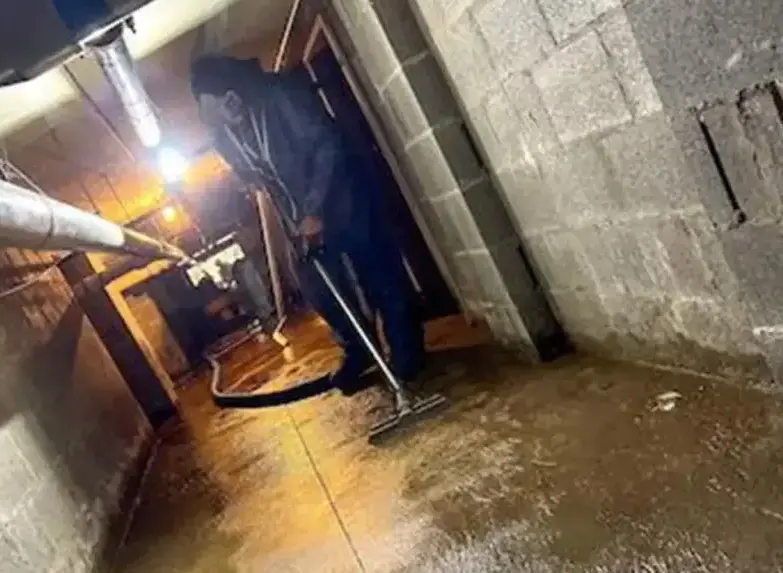
The extraction crew pumps deep water and extracts carpet and pad. Then the walkthrough maps moisture behind walls with thermal imaging and meters.
- Clean water in a finished basement can often be dried in place with small access holes at the base of the wall.
- Paneling or drywall wet above a couple of feet, or touched by outside water, gets a flood cut.
- Carpet pad usually comes out; carpet may be saved when the water was clean and caught early.
- Air movers and LGR dehumidifiers dry the framing, the bottom plate and the slab edge.
Concrete holds water. A basement slab can read wet for days after the surface looks dry. New flooring goes down only after the slab readings reach the drying goal.
Category and cost
Water that came through the wall from outside is treated as Category 3, so more material comes out. Water from a supply line or tank is usually Category 1 and allows more drying in place. The typical ranges below reflect that difference. If a pump failure caused the flood, the sump pump failure page covers the next steps, and a failed tank is covered under water heater failure cleanup.
Before the next storm
Ready.gov lists simple flood preparation steps, and the National Weather Service flood safety page explains watches and warnings. Cleaning gutters and extending downspouts before November keeps a lot of roof water away from the foundation.
Basement Flooding Cleanup across Auburn and nearby cities
The Auburn restoration crew works every part of the city across ZIPs 98001, 98002, 98071, 98092, from Downtown Auburn, Terminal Park, Lea Hill, West Hill, North Auburn, South Auburn out to Pacific, Algona, Kent, Federal Way, Covington and Sumner.
See every area and ZIP coveredRelated water damage services in Auburn
Basement Flooding Cleanup questions in Auburn
Can a finished basement be saved?
Often, when the water is clean and drying starts quickly. The drying team opens small access holes or removes baseboard to dry wall cavities in place. Outside water or long exposure means more removal.
Why is water coming through my basement wall?
Saturated soil pushes water through cracks, the wall and floor joint, and failed footing drains. It happens most on the uphill wall of a daylight basement during long rains.
Do I need to replace the carpet?
The pad almost always gets replaced. Carpet can often be dried and cleaned after a clean-water loss, but carpet touched by outside water or sewage is removed.
How long does a flooded basement take to dry?
Three to five days is typical for a contained clean-water loss. Concrete, thick carpet and cool winter temperatures can stretch that; equipment stays until the readings say dry.
Should I run a fan myself?
Moving air helps once standing water is gone, but box fans alone rarely dry wall cavities or a slab. LGR dehumidifiers remove the moisture that fans lift into the air.
Is basement seepage covered by insurance?
Seepage and groundwater are often excluded, while sudden failures like a burst pipe or tank are handled differently. Coverage depends on your policy, so it is worth checking with your own insurer.
Basement Flooding Cleanup in Auburn? Start the dry-out now.
Shut off the water if you can, keep clear of wet outlets, and call. The drying team maps the moisture and gets extraction started.