Sewage Backup Cleanup in Auburn, WA
Sewage is Category 3 the moment it backs up, and porous materials it touches come out rather than being dried. The mitigation team contains the area, removes the waste and treats the structure.
(888) 509-1696Call for Auburn sewage backup cleanup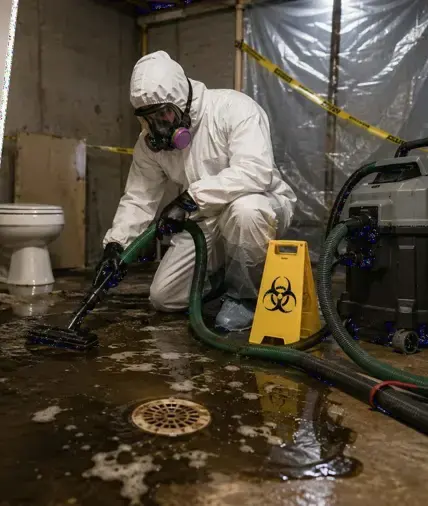
First steps for sewage backup cleanup in Auburn
- 1
Stop using water
No flushing, showers, laundry or dishwasher until the line is cleared.
- 2
Keep out of the area
Keep children and pets away and do not touch the waste.
- 3
Shut off HVAC
If the system draws air from the affected space, turn it off.
- 4
Photograph and call
Record the backup from a distance, then call for cleanup.
When you call, have this ready
- Which rooms and which level of the house are wet
- Whether the water is clean, gray or sewage
- When it started and whether the source is stopped
The standard behind sewage backup cleanup in Auburn
Rapid local response
Auburn water damage restoration experts work around the clock, and the response team rolls with truck-mounted extraction, air movers and moisture meters already on board.
IICRC S500 drying standard
IICRC S500 is the industry drying standard. The drying team runs structural drying, not just surface drying, and the equipment stays until the readings say dry.
Claim-ready documentation
A moisture map from the first walkthrough, daily psychrometric logs and timestamped photos taken before any demolition: the file an adjuster works from.
Green River valley water experts
Crawl spaces on the valley floor, daylight basements on West Hill and Lea Hill, and long wet-season rains: the Auburn restoration crew knows where water settles in a Puget Sound house.
What does sewage backup cleanup cost in Auburn, WA?
In Auburn, WA, sewage backup cleanup typically runs $2,500 to $12,000 or more. The drivers are the volume of waste, how many rooms it reached, how much carpet, drywall and insulation must be removed as Category 3 material and how long it sat.
One bathroom or floor drain
- Containment and PPE
- Hard surface cleaning
- Antimicrobial treatment
Lower level rooms
- Carpet and drywall removed
- HEPA air scrubbers
- Structural drying
Large area or long exposure
- Extensive removal
- Crawl space or slab treatment
- Full claim documentation
These are typical ranges, not a quote. For a closer planning number try the water damage cost calculator.
How sewage backup cleanup moves from call to dry
Walkthrough and moisture map
The tech who does the walkthrough finds the source and maps every wet wall, floor and cavity before any equipment goes down.
Extraction
The extraction crew pulls standing water so it leaves the building instead of moving to the next room.
Drying setup
Air movers go in at the evaporation load of each room, with dehumidifiers pulling that moisture back out of the air.
Daily readings
The drying team logs temperature, humidity and material readings daily and moves equipment to where the water still is.
Dry verification
Equipment comes out when wet materials read within 2 to 4 points of a dry reference, and the logs go into the claim file.
A sewage backup in Auburn usually starts in the oldest pipe on the property. Homes near downtown and Terminal Park still have cast iron or clay sewer laterals that crack, sag and fill with roots. In a heavy rain, groundwater getting into the system can also surcharge the lines. Either way, waste comes up through the lowest drain: a basement floor drain, a lower-level toilet or a shower.
Why sewage is handled differently
Sewage carries bacteria, viruses and parasites. It is Category 3 from the moment it backs up, which changes every step of the job.
- Protective gear at minimum: gloves, boots, eye protection and a respirator, with coveralls for the crew.
- Containment with plastic sheeting and negative air, plus HEPA air scrubbers, keeps contamination out of clean rooms.
- Carpet, pad, drywall, insulation and other porous materials touched by the water are removed, not dried.
- Hard surfaces are cleaned and treated with an EPA-registered antimicrobial left for its labeled dwell time.
After the removal
Once the waste and contaminated materials are out and surfaces are treated, air movers and dehumidifiers dry the framing and slab to the drying goal, with readings logged daily. A plumber clears or repairs the line, often with a camera inspection to find the break or root intrusion.
Keep everyone out. Children, pets and anyone with a weak immune system should stay away from the affected area. Do not run the HVAC system if its ducts or return are in the contaminated space.
Common causes in Auburn
- Root intrusion and sagging joints in older clay and cast iron laterals.
- Grease and wipes building up in the line.
- Surcharged municipal lines during long rains.
- Crawl space drain leaks that go unnoticed for weeks.
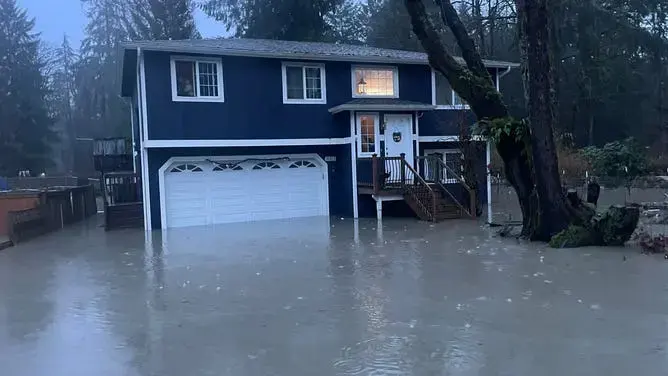
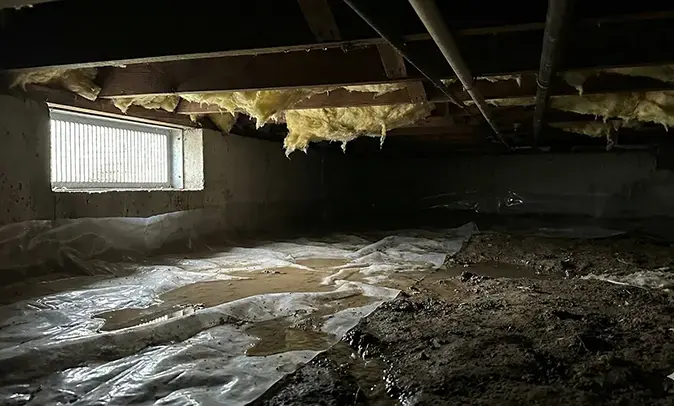
The EPA explains why contaminated porous materials should be discarded, and OSHA personal protective equipment guidance covers the gear used around sewage. When outside floodwater brought the sewage in, see flood and storm water cleanup; for backups under the house, see crawl space water damage.
Sewage Backup Cleanup across Auburn and nearby cities
The Auburn restoration crew works every part of the city across ZIPs 98001, 98002, 98071, 98092, from Downtown Auburn, Terminal Park, Lea Hill, West Hill, North Auburn, South Auburn out to Pacific, Algona, Kent, Federal Way, Covington and Sumner.
See every area and ZIP coveredRelated water damage services in Auburn
Sewage Backup Cleanup questions in Auburn
Is it safe to clean up sewage myself?
Sewage is Category 3 and carries pathogens. Small, contained backups on hard floors can be handled with proper gear, but anything reaching carpet, drywall or a crawl space is usually handled with containment, HEPA air scrubbers and removal of porous materials.
Can sewage-soaked carpet be cleaned?
No. Carpet, pad, upholstery and other porous materials touched by sewage are removed and disposed of, following the IICRC S500 approach to Category 3 water.
What causes sewer backups in older Auburn homes?
Aging cast iron and clay laterals crack and fill with roots, and heavy rain can surcharge the lines. A camera inspection by a plumber usually finds the cause.
How long does sewage cleanup take?
Removal and treatment often take one to two days, then drying runs three to five days. Larger or longer exposures take more time.
Does homeowners insurance cover sewage backup?
Many policies need a sewer backup endorsement. Coverage depends on your policy, so it is worth checking with your own insurer; the claim file documents the category, materials removed and drying logs.
What is an EPA-registered antimicrobial?
A disinfectant product registered with the EPA for the use on its label. It is applied after cleaning and left for its labeled dwell time to work.
Sewage Backup Cleanup in Auburn? Start the dry-out now.
Shut off the water if you can, keep clear of wet outlets, and call. The drying team maps the moisture and gets extraction started.