Ceiling Leak Water Damage in Auburn, WA
An upstairs toilet, tub or supply line can soak the ceiling below long before anyone sees a drip. The drying team traces the leak path and dries the ceiling, joists and walls it reached.
(888) 509-1696Get the Auburn ceiling leak dried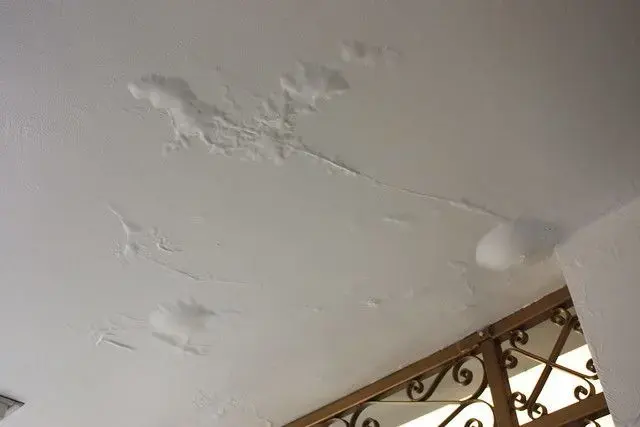
First steps for ceiling leak water damage in Auburn
- 1
Shut off the fixture
Close the valve at the toilet, sink or washer, or the main.
- 2
Cut the light circuit
If water is near a fixture, switch it off at a dry panel.
- 3
Relieve a bulge
Place a bucket and poke a small hole at the low point.
- 4
Photograph and call
Record the ceiling and the source upstairs.
When you call, have this ready
- Which rooms and which level of the house are wet
- Whether the water is clean, gray or sewage
- When it started and whether the source is stopped
The standard behind ceiling leak water damage in Auburn
Rapid local response
Auburn water damage restoration experts work around the clock, and the response team rolls with truck-mounted extraction, air movers and moisture meters already on board.
IICRC S500 drying standard
IICRC S500 is the industry drying standard. The drying team runs structural drying, not just surface drying, and the equipment stays until the readings say dry.
Claim-ready documentation
A moisture map from the first walkthrough, daily psychrometric logs and timestamped photos taken before any demolition: the file an adjuster works from.
Green River valley water experts
Crawl spaces on the valley floor, daylight basements on West Hill and Lea Hill, and long wet-season rains: the Auburn restoration crew knows where water settles in a Puget Sound house.
What does ceiling leak water damage cost in Auburn, WA?
In Auburn, WA, ceiling leak water damage restoration typically runs $800 to $5,500 or more. The drivers are the water category, whether ceiling drywall and insulation must come out, how many rooms the water reached and how long the leak ran.
Small stain, clean water
- Leak path mapped
- Ceiling dried in place
- Readings until dry
Ceiling section removed
- Controlled drywall removal
- Joist bay drying
- Subfloor above checked
Toilet or drain water
- Category 2 or 3 removal
- Cavity cleaning
- Claim documentation
These are typical ranges, not a quote. For a closer planning number try the water damage cost calculator.
How ceiling leak water damage moves from call to dry
Walkthrough and moisture map
The tech who does the walkthrough finds the source and maps every wet wall, floor and cavity before any equipment goes down.
Extraction
The extraction crew pulls standing water so it leaves the building instead of moving to the next room.
Drying setup
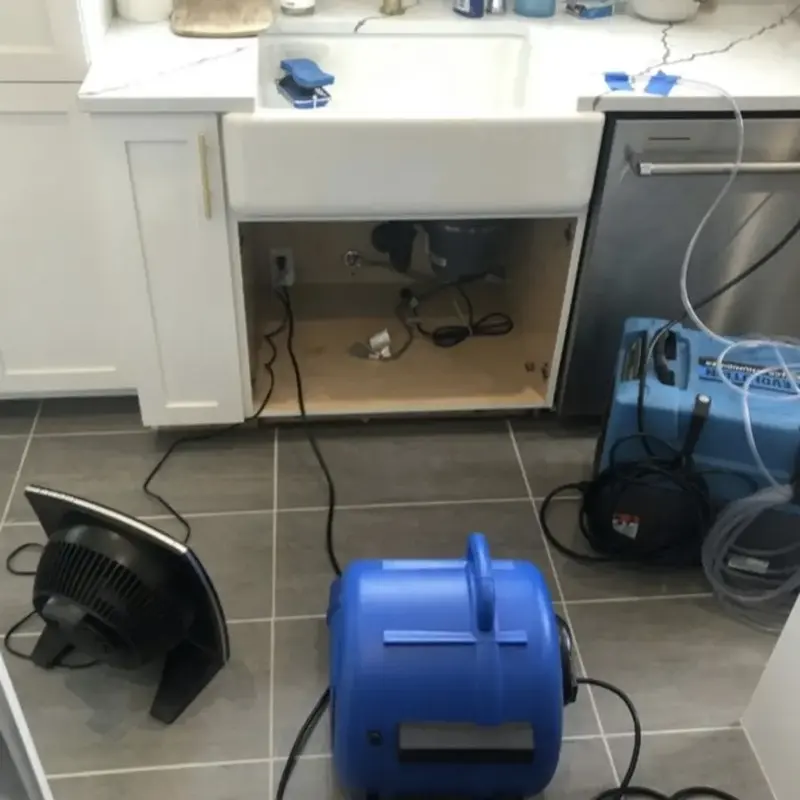
Air movers go in at the evaporation load of each room, with dehumidifiers pulling that moisture back out of the air.
Daily readings
The drying team logs temperature, humidity and material readings daily and moves equipment to where the water still is.
Dry verification
Equipment comes out when wet materials read within 2 to 4 points of a dry reference, and the logs go into the claim file.
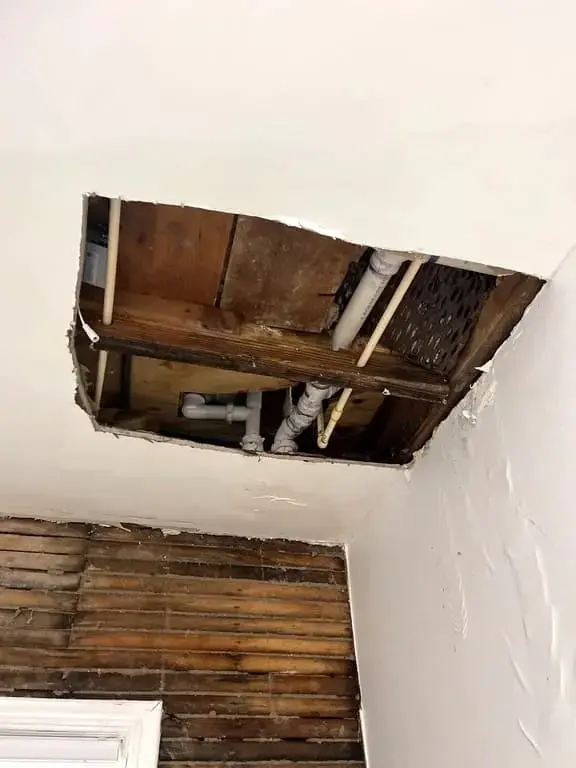
Two-story homes in Lakeland Hills and on Lea Hill often put the laundry and bathrooms upstairs, directly over living space. When a toilet supply line, a tub drain, a shower pan or a washer hose leaks, water spreads along the joist bays and shows up as a stain, a bubble or a drip somewhere nearby, sometimes a whole room away from the source. That is different from a roof leak: the water comes from inside, often clean at the start, and the fix begins with the plumbing.
Common interior sources
- Toilet supply lines and wax rings.
- Tub and shower drains and failed shower pans.
- Upstairs washer hoses and drain boxes.
- Refrigerator ice-maker lines running through the floor.
How the ceiling is handled
- The water to the leaking fixture gets shut off and the source made safe.
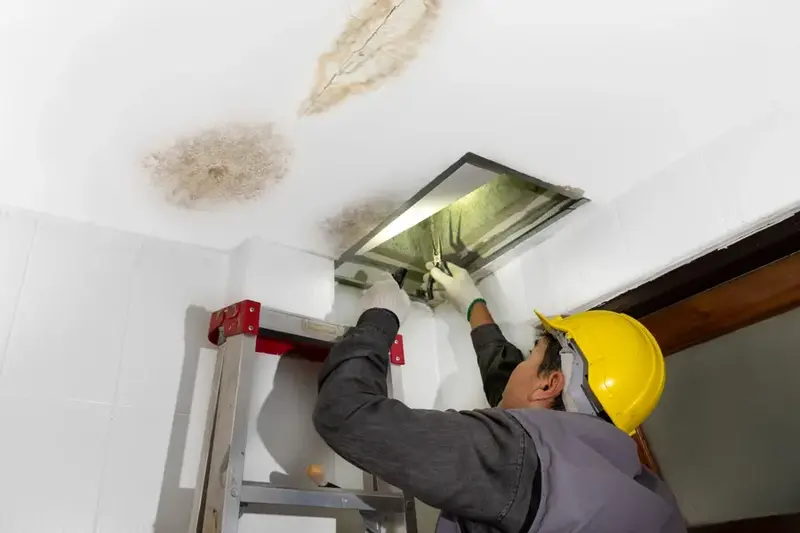
- The tech who does the walkthrough maps the wet area from above and below with thermal imaging and meters.
- A sagging or saturated ceiling section is removed in a controlled way; a firm ceiling is often dried in place.
- Air movers and dehumidifiers dry the joist bay, the subfloor above and the top plate of the walls.
Water near a light fixture is an electrical hazard. If water is coming through a ceiling light or fan, switch that circuit off at the breaker before touching anything.
Category and cleanup
A supply line leak is Category 1. A toilet overflow or drain leak is Category 2 or 3, which means wet ceiling drywall and insulation are removed and the cavity is cleaned before drying. Roof-origin leaks are covered on the roof leak page, and washer or fridge line failures under appliance leak cleanup.
Finding slow leaks early
Checking under sinks and around toilets a few times a year catches most slow leaks. EPA WaterSense explains how to use the water meter to spot a hidden leak, and the EPA mold cleanup page explains why ceilings wet for more than 24 to 48 hours need attention.
Ceiling Leak Water Damage across Auburn and nearby cities
The Auburn restoration crew works every part of the city across ZIPs 98001, 98002, 98071, 98092, from Downtown Auburn, Terminal Park, Lea Hill, West Hill, North Auburn, South Auburn out to Pacific, Algona, Kent, Federal Way, Covington and Sumner.
See every area and ZIP coveredRelated water damage services in Auburn
Ceiling Leak Water Damage questions in Auburn
How do I find where a ceiling leak is coming from?
Look directly above for a bathroom, laundry or kitchen, then check the supply lines, drain and seals. Water often travels along joists, so the source can be several feet from the stain.
Does a stained ceiling always need replacing?
No. A ceiling that stayed firm and dried quickly can often be dried in place and sealed before painting. Sagging, crumbling or long-wet drywall comes out.
Is a ceiling leak from a toilet dangerous?
Toilet water is Category 2 or worse, so wet drywall and insulation are removed and the cavity is cleaned rather than simply dried.
Can I just paint over the stain?
Only once the ceiling is dry and the leak is fixed. Painting over wet drywall traps moisture and the stain usually returns.
How long does ceiling drying take?
A contained ceiling leak usually dries in two to four days with air movers and dehumidification, longer when insulation or the subfloor above is soaked.
Will insurance cover a ceiling leak?
A sudden plumbing failure is often treated differently from a slow, long-term leak. Coverage depends on your policy, so it is worth checking with your own insurer.
Ceiling Leak Water Damage in Auburn? Start the dry-out now.
Shut off the water if you can, keep clear of wet outlets, and call. The drying team maps the moisture and gets extraction started.