Roof Leak Water Damage in Auburn, WA
Months of rain, moss and the occasional windstorm find every weak spot in a roof. The drying team pulls wet attic insulation, dries the roof deck and framing and keeps the ceiling from failing.
(888) 509-1696Get the Auburn attic dried out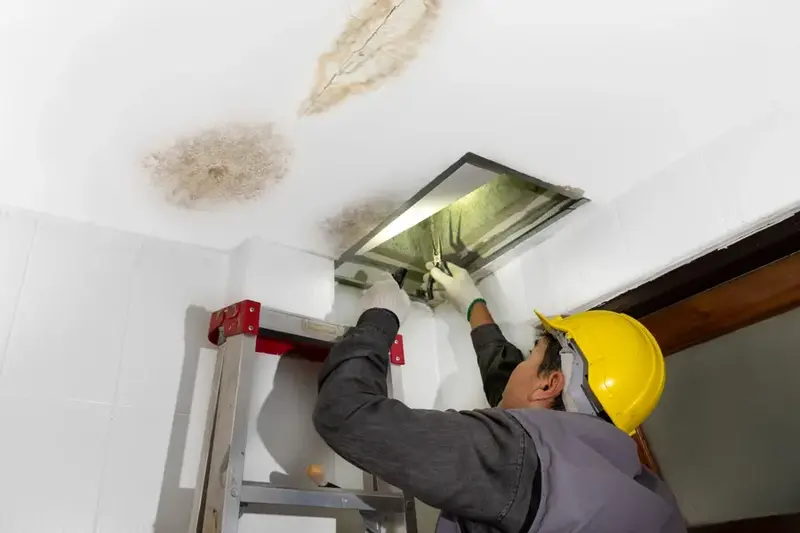
First steps for roof leak water damage in Auburn
- 1
Contain the drip
Buckets and towels under the leak; move furniture away.
- 2
Stay clear of sags
Keep everyone out from under a bulging ceiling.
- 3
Get it covered
A roofer or tarp stops new water from entering.
- 4
Photograph and call
Record the ceiling, the attic and the roof damage.
When you call, have this ready
- Which rooms and which level of the house are wet
- Whether the water is clean, gray or sewage
- When it started and whether the source is stopped
The standard behind roof leak water damage in Auburn
Rapid local response
Auburn water damage restoration experts work around the clock, and the response team rolls with truck-mounted extraction, air movers and moisture meters already on board.
IICRC S500 drying standard
IICRC S500 is the industry drying standard. The drying team runs structural drying, not just surface drying, and the equipment stays until the readings say dry.
Claim-ready documentation
A moisture map from the first walkthrough, daily psychrometric logs and timestamped photos taken before any demolition: the file an adjuster works from.
Green River valley water experts
Crawl spaces on the valley floor, daylight basements on West Hill and Lea Hill, and long wet-season rains: the Auburn restoration crew knows where water settles in a Puget Sound house.
What does roof leak water damage cost in Auburn, WA?
In Auburn, WA, roof leak water damage restoration typically runs $1,000 to $7,000 or more, not counting the roof repair. The drivers are how much insulation got wet, whether ceiling drywall must come out, how many rooms are affected and how long the leak ran.
Small attic leak
- Wet insulation removed
- Attic drying
- Ceiling dried in place
Ceiling damage in one or two rooms
- Ceiling drywall removed
- Framing drying
- Daily readings
Storm opening, several rooms
- Extensive insulation removal
- Wall and ceiling drying
- Claim documentation
These are typical ranges, not a quote. For a closer planning number try the water damage cost calculator.
How roof leak water damage moves from call to dry
Walkthrough and moisture map
The tech who does the walkthrough finds the source and maps every wet wall, floor and cavity before any equipment goes down.
Extraction
The extraction crew pulls standing water so it leaves the building instead of moving to the next room.
Drying setup
Air movers go in at the evaporation load of each room, with dehumidifiers pulling that moisture back out of the air.
Daily readings
The drying team logs temperature, humidity and material readings daily and moves equipment to where the water still is.
Dry verification
Equipment comes out when wet materials read within 2 to 4 points of a dry reference, and the logs go into the claim file.
A roof leak in Auburn is rarely a single dramatic event. More often, weeks of rain work through lifted shingles, moss-packed valleys or failed flashing, and the water soaks attic insulation for a long time before a stain shows on the ceiling. A fall windstorm can then open the roof outright. Either way, the water sits in the attic envelope, where it wets the roof deck, the rafters and the top of the ceiling drywall.
How rain gets through Auburn roofs
- Moss growth that lifts shingles and holds water against the roof.
- Flashing at chimneys, skylights and walls that loosens over time.
- Clogged gutters that back water under the roof edge.
- Wind-driven rain and fallen limbs during fall and winter storms.
What the drying team does
The roof itself is a roofer's job, and a tarp often goes on first. The water inside the house is the restoration side.
- The walkthrough traces the wet path from the roof deck to the ceiling with thermal imaging and meters.
- Soaked blown-in or batt insulation comes out, because it holds water against the ceiling drywall.
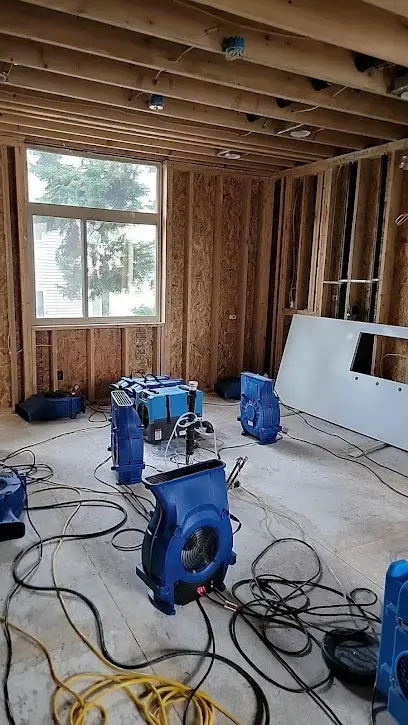
- Air movers and dehumidifiers dry the attic framing and roof sheathing.
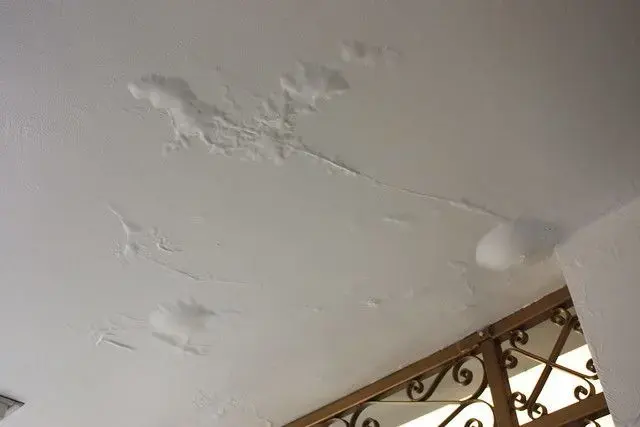
- Ceiling drywall that sagged or stayed wet is removed; ceilings that stayed firm are often dried in place.
A sagging ceiling can drop without warning. Keep people and pets out of the room under a bulging ceiling and put a bucket under any drip. Poking a small hole at the low point lets the water drain in one place.
Documentation for the claim
Storm damage is documented with photos of the roof opening, the attic and the ceiling before anything is removed, plus the moisture readings. Leaks from inside the house, like an upstairs bathroom, are covered on the ceiling leak page, and the drying process is described under structural drying.
Storm preparation
Clean gutters and clear moss before the rainy season, and trim limbs over the roof. The National Weather Service Seattle office issues wind and heavy rain warnings, and Ready.gov has storm preparation checklists.
Roof Leak Water Damage across Auburn and nearby cities
The Auburn restoration crew works every part of the city across ZIPs 98001, 98002, 98071, 98092, from Downtown Auburn, Terminal Park, Lea Hill, West Hill, North Auburn, South Auburn out to Pacific, Algona, Kent, Federal Way, Covington and Sumner.
See every area and ZIP coveredRelated water damage services in Auburn
Roof Leak Water Damage questions in Auburn
Who fixes the roof and who dries the house?
A roofer repairs or tarps the roof. The restoration side removes wet insulation, dries the attic framing and ceilings, and documents the moisture for the claim. Both usually happen in the same week.
Does wet attic insulation have to be replaced?
Soaked insulation usually comes out, because it compresses, loses its value and holds water against the drywall. Lightly damp areas can sometimes dry in place.
Why does the stain keep growing after the rain stops?
Water held in the insulation keeps feeding the drywall below. Until the attic is dried, the stain can spread for days.
Can a ceiling be dried without removing it?
Often, when it stayed firm and the leak was caught early. A ceiling that sagged, cracked or stayed wet for days usually comes down.
How long does attic drying take?
Three to five days is common once the roof is covered. Cold, wet weather slows it, so dehumidification is sized to keep drying moving.
Is roof leak damage covered by insurance?
Sudden storm damage is often treated differently from a slow leak caused by wear. Coverage depends on your policy, so it is worth checking with your own insurer; photos of the roof and attic help.
Roof Leak Water Damage in Auburn? Start the dry-out now.
Shut off the water if you can, keep clear of wet outlets, and call. The drying team maps the moisture and gets extraction started.