Commercial Water Damage in Auburn, WA
Auburn's valley floor is lined with distribution centers, light industry, offices and retail. The commercial drying team works around operations, with extraction, containment and drying scaled to large spaces.
(888) 509-1696Get Auburn commercial drying moving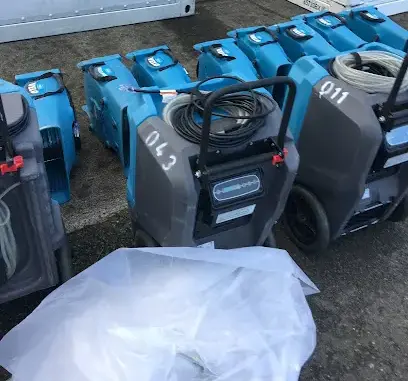
First steps for commercial water damage in Auburn
- 1
Shut off the source
Close the sprinkler zone valve or the building main if it is safe.
- 2
Protect people and power
Keep staff clear of wet electrical equipment.
- 3
Move inventory
Get product and records off wet floors.
- 4
Document and call
Photograph damaged stock and areas before cleanup.
When you call, have this ready
- Which rooms and which level of the house are wet
- Whether the water is clean, gray or sewage
- When it started and whether the source is stopped
The standard behind commercial water damage in Auburn
Rapid local response
Auburn water damage restoration experts work around the clock, and the response team rolls with truck-mounted extraction, air movers and moisture meters already on board.
IICRC S500 drying standard
IICRC S500 is the industry drying standard. The drying team runs structural drying, not just surface drying, and the equipment stays until the readings say dry.
Claim-ready documentation
A moisture map from the first walkthrough, daily psychrometric logs and timestamped photos taken before any demolition: the file an adjuster works from.
Green River valley water experts
Crawl spaces on the valley floor, daylight basements on West Hill and Lea Hill, and long wet-season rains: the Auburn restoration crew knows where water settles in a Puget Sound house.
What does commercial water damage cost in Auburn, WA?
In Auburn, WA, commercial water damage restoration typically runs $3,000 to $25,000 or more. The drivers are the square footage, the water category, how much drywall, ceiling tile and flooring is affected, and how much equipment the space needs to reach the drying goal.
Suite or small storefront
- Extraction and drying
- Containment
- Daily logs
Office floor or restaurant
- Flooring and drywall removal
- Large-loss dehumidifiers
- After-hours work
Warehouse or multi-tenant
- Scaled equipment and power
- Category 3 protocol if needed
- Full claim documentation
These are typical ranges, not a quote. For a closer planning number try the water damage cost calculator.
How commercial water damage moves from call to dry
Walkthrough and moisture map
The tech who does the walkthrough finds the source and maps every wet wall, floor and cavity before any equipment goes down.
Extraction
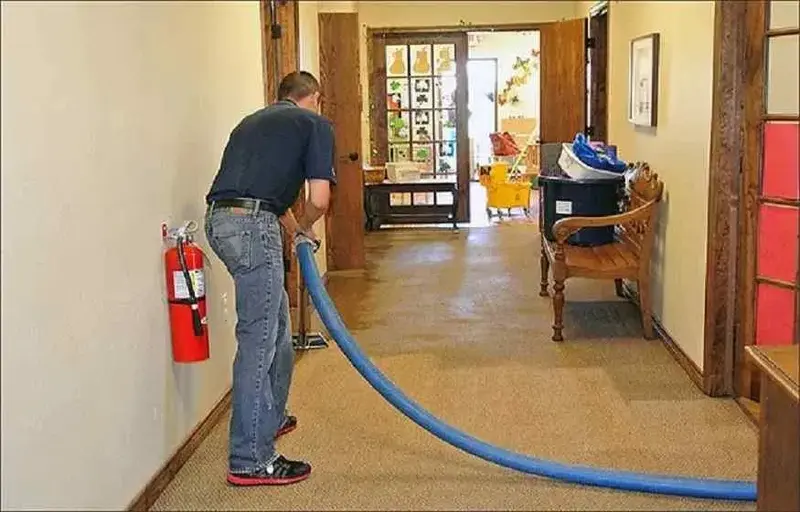
The extraction crew pulls standing water so it leaves the building instead of moving to the next room.
Drying setup
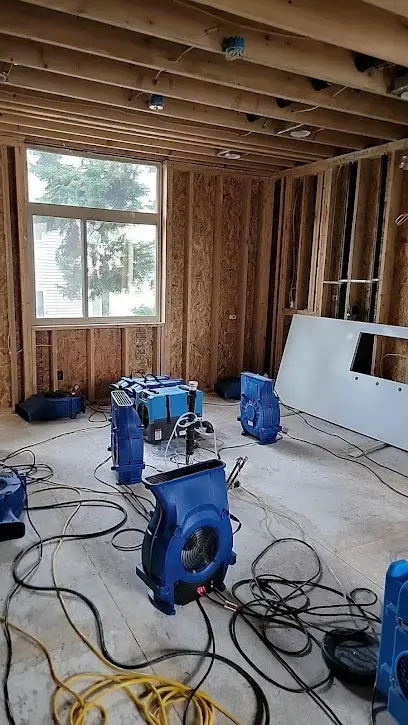
Air movers go in at the evaporation load of each room, with dehumidifiers pulling that moisture back out of the air.
Daily readings
The drying team logs temperature, humidity and material readings daily and moves equipment to where the water still is.
Dry verification
Equipment comes out when wet materials read within 2 to 4 points of a dry reference, and the logs go into the claim file.
The Green River valley between Auburn and Kent is one of the largest warehouse and distribution areas in the Puget Sound region, alongside offices, medical buildings, restaurants and the retail along the SR 18 and SR 167 corridors. A water loss in a commercial building hits inventory, tenants and schedules at once, so the plan starts with what has to stay open and works around it.
Common commercial water losses
- Fire sprinkler line breaks and freezes in unheated areas.
- Flat roof leaks and drain backups during long rains.
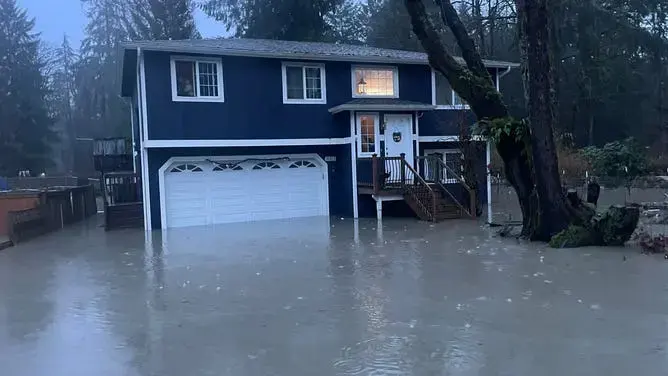
- Storm water entering loading docks on the valley floor.
- Restroom and kitchen supply or drain failures in offices and restaurants.
How a commercial loss is handled
- The walkthrough maps the wet area across floors, walls, racking areas and ceiling cavities.
- Extraction runs with truck-mounted and portable units sized to the floor area.
- Containment separates the drying zone from working areas and keeps dust and moisture out of clean space.
- Large-loss LGR and desiccant dehumidifiers, air movers and temporary power are staged to the building.
Inventory and records first. Moving product off wet floors and photographing damaged stock before anything is thrown out keeps the business interruption and property claim clean.
Documentation for owners, tenants and adjusters
Commercial files carry the same core as a residential job, scaled up: a moisture map, daily psychrometric logs, timestamped photos before removal and a line-item scope. Clear logs help property managers, tenants and adjusters agree on what was wet and when it was dry. Sewage or outside water in a commercial space follows the same Category 3 protocol as the sewage backup cleanup and flood and storm water pages describe.
Planning ahead
A shutoff map, an emergency contact sheet and a plan for moving inventory shorten any water loss. Ready.gov business preparedness and the National Weather Service Seattle office storm outlook help facility managers plan for the wet season.
Commercial Water Damage across Auburn and nearby cities
The Auburn restoration crew works every part of the city across ZIPs 98001, 98002, 98071, 98092, from Downtown Auburn, Terminal Park, Lea Hill, West Hill, North Auburn, South Auburn out to Pacific, Algona, Kent, Federal Way, Covington and Sumner.
See every area and ZIP coveredRelated water damage services in Auburn
Commercial Water Damage questions in Auburn
Can the business stay open during drying?
Often. Containment separates the drying zone from working areas, and noisy equipment can be scheduled around business hours where the drying goal allows.
What causes most commercial water losses?
Sprinkler line failures, roof and roof drain leaks, restroom and kitchen plumbing and storm water at loading docks are the most common in the valley.
How is a warehouse floor dried?
Standing water is extracted with truck-mounted and portable units, then air movers and large-loss dehumidifiers dry the slab, walls and racking areas while readings are logged.
Does a commercial loss need different documentation?
The core file is the same, a moisture map, daily logs and timestamped photos, but it is scaled to the building and often shared with property managers and tenants.
How long does commercial drying take?
Most commercial losses dry in three to seven days depending on the class and area. Concrete and large volumes of wet material take longer.
Is commercial water damage covered by insurance?
Commercial property and business interruption policies vary widely. Coverage depends on the policy, so it is worth checking with your own insurer early.
Commercial Water Damage in Auburn? Start the dry-out now.
Shut off the water if you can, keep clear of wet outlets, and call. The drying team maps the moisture and gets extraction started.